
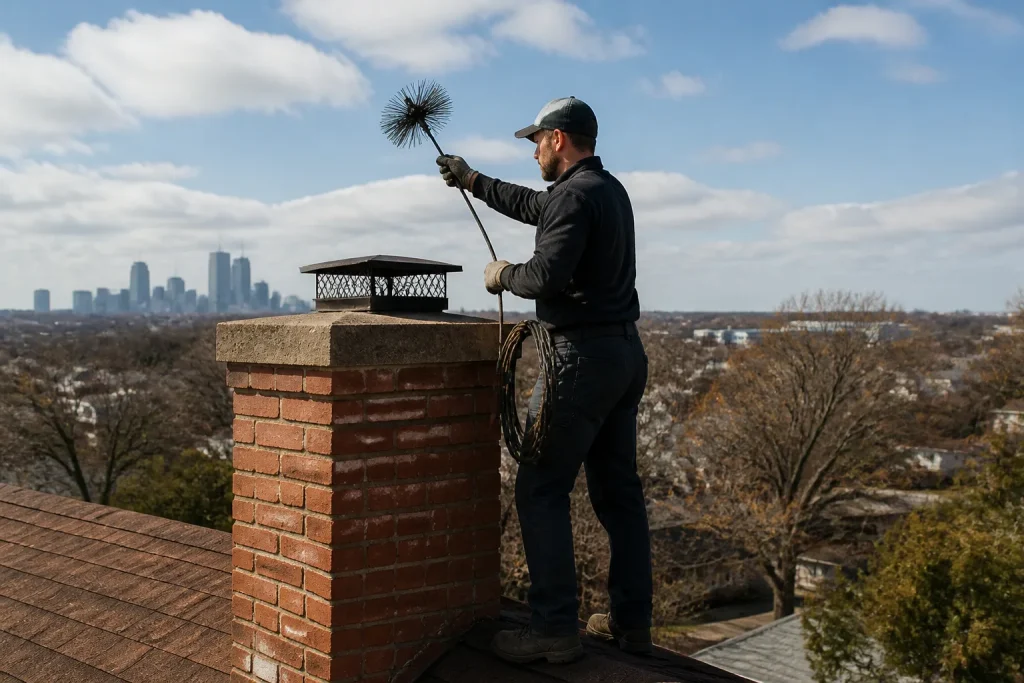
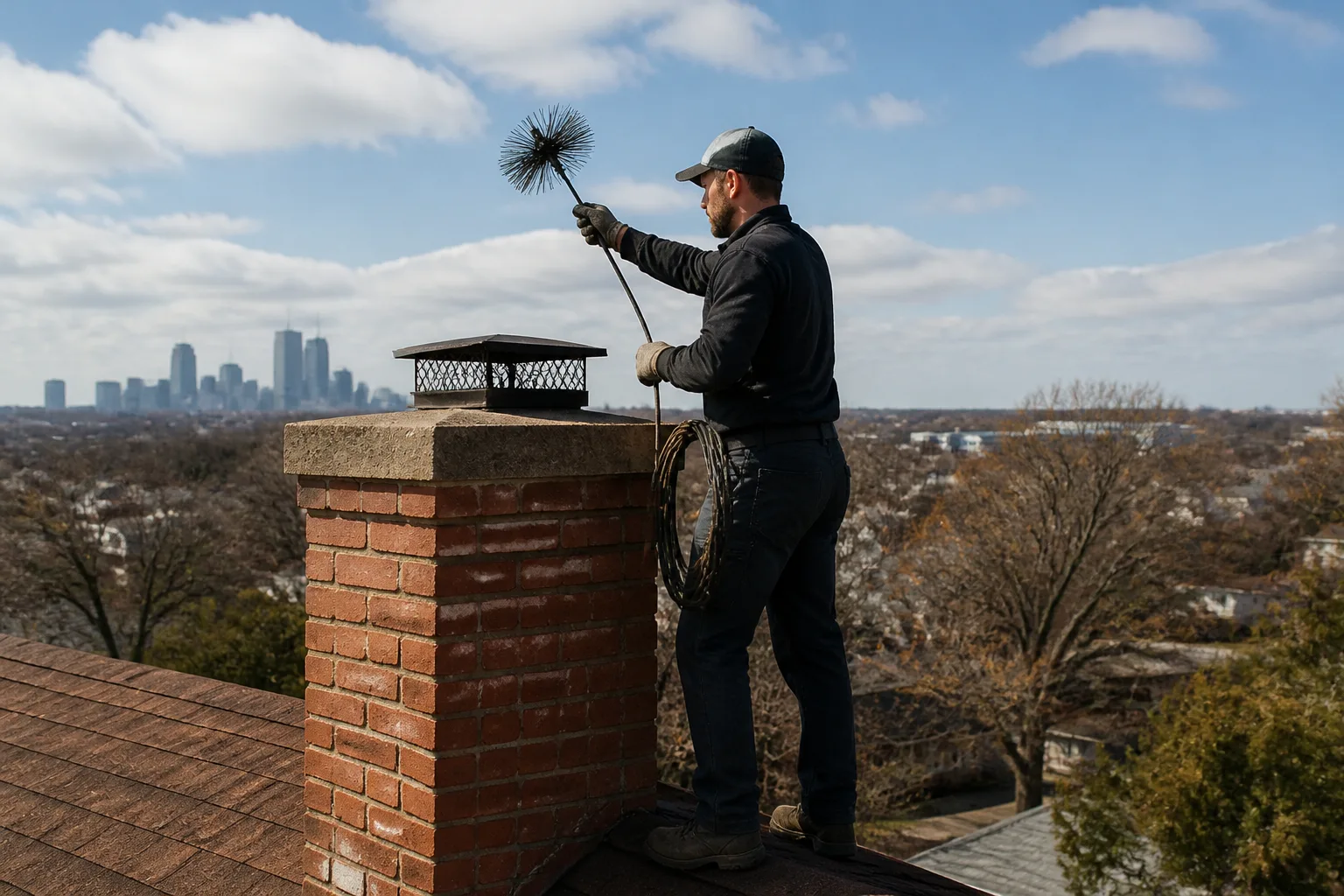
HeatShield Chimney Sweep in Oak Cliff: A Homeowner’s Guide
HeatShield is a ceramic resurfacing system, not a liner replacement, and that distinction decides whether it’s right for your chimney. It works by bonding a castable refractory sealant to a clay tile flue that still has its structure but has lost its smooth, sealed surface. If the tiles are cracked, spalled, or collapsed, it won’t help. The only honest way to know which category your chimney falls into is a camera scan before anyone applies anything. If you’d rather not climb up there yourself, call (888) 847-8540.
What Is HeatShield, Exactly?
HeatShield’s Cerfractory Flue Sealant is a castable refractory material, applied in a thin coat, that seals the cracks and spalls in a deteriorated clay tile liner and restores its smooth, sealed surface. It’s not paint and it’s not a sleeve. It’s a ceramic material that cures hard inside the flue and returns the liner to something closer to its original condition.
That distinction matters because HeatShield repairs the surface of a liner that’s still standing. It doesn’t replace the liner. Homeowners searching for HeatShield chimney repair in Oak Cliff TX often hear it described as “cheaper than relining,” which is true, but only for the right chimney. Understanding what the material actually bonds to is what separates a good decision from an expensive one.
The system comes in two application methods:
- Brush-on sealant. For hairline cracks and minor surface deterioration, the sealant is brushed directly onto the flue walls. It’s the lighter of the two applications and suits a liner that’s mostly sound with localized wear.
- The Resurfacing System with a sizing form. For flues with missing mortar joints or more widespread surface loss, a form is pulled through the flue to press the refractory material into a uniform coat. This rebuilds the joint line and restores a continuous interior surface.
Which method applies to your chimney is a decision the camera scan makes, not a sales conversation. In our experience, the scan tells you within minutes whether the flue is a candidate at all.
Why Mid-Century Oak Cliff Chimneys Are Often HeatShield Candidates
The mid-century building boom in Oak Cliff left a lot of masonry chimneys with clay tile flues, and those flues age in a predictable way. The tiles themselves are usually still intact decades later. What goes first is the mortar joint between them.
Mortar erodes from the inside out as flue gases and moisture work on it season by season. The tile stays put. The joint recedes. That gap between tile and joint is exactly what the HeatShield Resurfacing System is engineered to fill. It’s the middle ground between “your liner is fine” and “your liner has to come out.”
A few things we look for on Oak Cliff chimneys specifically:
- Intact tile with eroded joints. The best-case HeatShield candidate. The structure is there, the seal is gone.
- Localized hairline cracking. Often a brush-on sealant job if the tile face is otherwise sound.
- Spalled or broken tile faces. Not a HeatShield job. The material needs something solid to bond to.
- Collapsed sections or heavy offsets. Also not a HeatShield job. We’re talking DuraFlex liners or a rebuild at that point.
The masonry chimneys in Oak Cliff that have been through many heating seasons without service tend to sit in the first two categories or the last two. The scan sorts it out.
What HeatShield Can’t Fix
HeatShield restores a liner’s surface; it does not rebuild a liner that’s lost its structure. If the tile behind the crack has spalled, broken loose, or collapsed, there’s nothing for the refractory material to hold onto. Applying it anyway is how homeowners end up paying twice.
Here’s what falls outside HeatShield’s reach:
- Spalled or broken tile. The bond fails. The repair fails with it.
- Collapsed tile sections. There’s no substrate. This needs a new liner or a rebuild.
- Significant flue offsets. A flue that jogs and traps debris at the offset can’t be uniformly resurfaced, and the trapped creosote is its own hazard.
- Flues already lined with something else. A prior liner installation changes the whole conversation.
When HeatShield won’t work, the next step is usually a DuraFlex flexible liner, sized and shaped to the specific flue rather than forced to fit. Older Oak Cliff chimneys with irregular or offset flues are exactly where a custom-fit flexible liner earns its place. The point of a camera scan is to catch that before anyone commits to a resurfacing job.
The Post-Sweep Timeline: What Happens After HeatShield
HeatShield goes on after the chimney is swept, not before. The flue has to be clean for the material to bond, so the job runs in order: sweep first, inspect second, apply third.
Once the material is applied, it needs a cure period before the fireplace can be used again. The length of that cure period isn’t a fixed number. It depends on the ambient temperature on the day of application, and a technician should give you a specific hour count tied to that day’s conditions rather than a vague “give it a few days.” Ask for the number. It’s a fair question and it should have a clear answer.
What you can expect from a well-run job:
- The sweep comes first, with a camera inspection and a photo report you can look at yourself.
- The inspection findings determine whether HeatShield, a DuraFlex liner, or nothing at all is the right call.
- The HeatShield application follows the sweep, using the method the flue condition calls for.
- You get the cure time in hours before you light the first fire.
We use HeatShield because it’s a specialist product most competitors haven’t invested in, not because it’s the easiest thing to sell. It solves a real problem in Oak Cliff masonry chimneys, but only where the flue qualifies.
When to call a pro: if you don’t have a camera report from the last year or two, that’s the place to start. You can’t choose HeatShield, a DuraFlex liner, or a rebuild without seeing the flue, and guessing is how money gets spent twice. A trained technician handles the scan and the application; the flue interior isn’t a place to improvise.
Related services in Oak Cliff: if your inspection turns up something beyond the liner, our chimney cap & crown work and fireplace repair are handled by the same team that runs the sweep.
Key Takeaways
- HeatShield is a resurfacing system, not a liner replacement. It bonds to an intact clay tile liner that has lost its surface or its mortar joints.
- The two application methods are brush-on sealant for hairline cracks and the Resurfacing System with a sizing form for missing mortar joints.
- Mid-century Oak Cliff clay tile flues are often good candidates because the tile is intact and the mortar joints have eroded.
- Spalled tile, collapsed sections, and heavy flue offsets need a DuraFlex liner or a rebuild, not HeatShield.
- The flue needs to cure before the first fire, and the technician should give you a specific hour count based on the day’s temperature.