
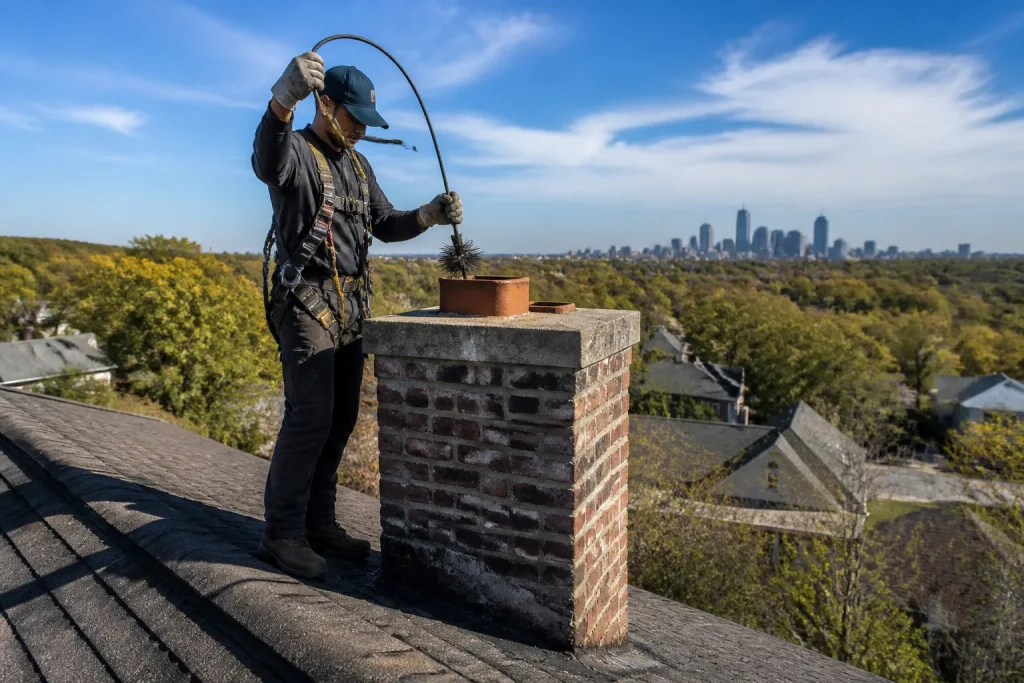
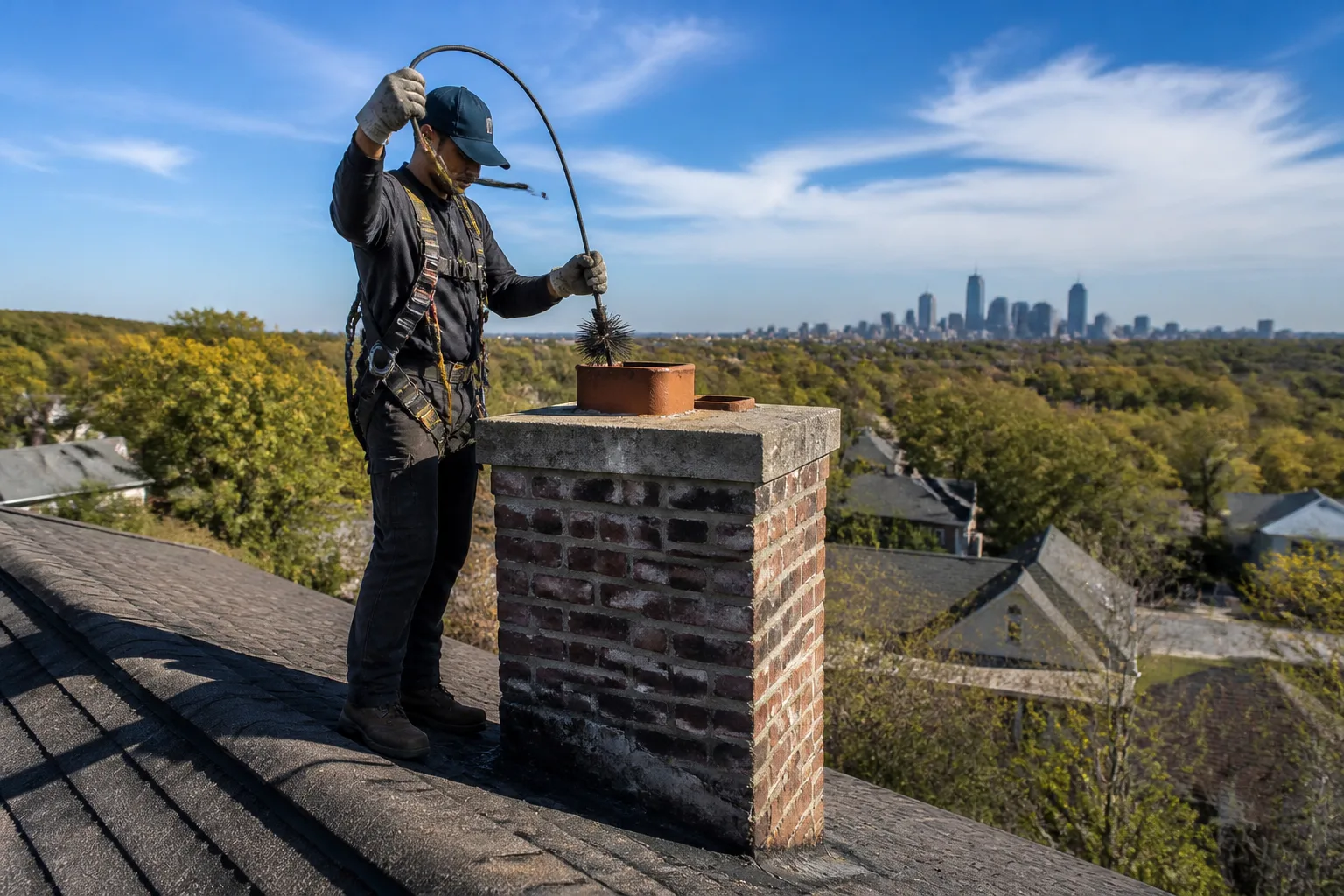
Top Signs You Need Chimney Cleaning Service – Don’t Ignore These
Smoke that rolls into the room on a cold start and then clears after five minutes is the symptom most Oak Cliff homeowners write off as normal. It isn’t. More often than not, it points to a cold flue column, and sometimes it’s the first visible hint that creosote has narrowed the flue and restricted airflow. The real problem with chimney warning signs isn’t that people ignore them on purpose. It’s that most folks have never been told what normal looks like, so they can’t tell the difference between a chimney that’s working and one that’s quietly telling them something.
If you’d rather have a trained eye look it over than guess, call (888) 847-8540.
Key Takeaways
- Smoke backup, slow burns, and odd smells each point to a specific mechanical cause, not just “dirty chimney.”
- Creosote comes in three stages, and the glazed third stage can’t be removed with a standard brush.
- Animal nests don’t look like creosote on a camera, so a nesting blockage can hide behind a “clean-looking” flue.
- White staining on exterior brick signals moisture getting in, and it accelerates liner damage if it isn’t handled before the next season.
- A fireplace that’s sat unused for a season or more needs an inspection before first light, no matter how it looks.
Smoke Backing Into the Room on a Cold Start
Here’s the case in plain terms: when smoke puffs into the room at startup and then settles down once the fire is going, the flue hasn’t warmed up yet. Hot air rises, and a cold column of air sitting in the flue resists the draft until the fire pushes it out. That part is physics. The trouble is when it doesn’t clear, or when it gets worse over the course of a season.
Two things cause the persistent version. The first is restricted airflow. Creosote buildup on the flue walls shrinks the opening the smoke has to travel through, so even a warm flue struggles to pull. The second is a partial blockage somewhere up top: a bird nest, a collapsed cap screen, or a wad of leaves that fell in and never left. Both show up as the same symptom, and only a camera or a proper inspection tells them apart.
If your smoke backup used to clear in two minutes and now takes ten, that’s a change in the system. Changes are what we look for during a sweep and inspection in Oak Cliff. Before we recommend anything beyond a standard cleaning, we put a camera in the flue and show you what it’s seeing. You get written findings either way, and if the honest answer is “this can wait until next season,” we say so.
Your Fire Won’t Stay Lit – What a Slow Burn Really Means
A fire that smolders, needs constant tending, and dies down to a stubborn glow is often blamed on green wood or a wet log. Sometimes that’s fair. But a wood fire that consistently underperforms on dry, seasoned wood is a draft problem, and draft problems usually trace back to blockage. The flue isn’t moving enough air to feed the fire, so you get a lazy burn, more smoke in the room, and a colder chimney that makes creosote condense faster on the walls.
That last part matters. A slow-burning fire is a creosote factory. Cool flue gases deposit more readily, and the cycle compounds: more buildup, less draft, slower fire, more buildup. Oak Cliff fireplaces that run this way all winter tend to be the ones that need sweeping before the season ends rather than after it.
What to check before assuming the worst:
- Is your wood actually dry? Split it and look at the inside. Wet wood hisses and smolders.
- Is the damper fully open? Partial openings kill draft.
- Is the cap screen clogged with soot or debris? A blocked screen strangles airflow.
- Has the flue been cleaned this season? If not, that’s the likeliest culprit.
If all four check out and the fire still sulks, it’s time for a professional look.
The Three Stages of Creosote, and Why the Third One Changes Everything
Not all creosote is the same substance, and this is where a lot of well-meaning advice falls apart. Creosote builds in three distinct stages, and the stage determines what it takes to remove it.
- Stage 1: Sooty, dusty, and flaky. It brushes off the flue walls with standard sweeping tools. This is the normal cleanup layer and the easiest to stay ahead of.
- Stage 2: Crunchy and somewhat tacky, like dried tar flakes. It still comes off with professional brushes and some patience, but it takes more aggression than a light pass.
- Stage 3: Glazed, shiny, and hard as glass. This is where standard sweeping stops working. Glazed creosote has baked onto the flue and can’t be brushed off. Left alone, it’s the layer most associated with chimney fires, because it ignites at a lower temperature than the other stages and burns hot.
Stage 3 is the reason an annual sweep matters more than the number on the calendar suggests. Catching buildup at Stage 1 costs you a routine cleaning. Catching it at Stage 3 sometimes means resurfacing or relining, which is a different job entirely. When we find glazed creosote in an Oak Cliff flue, we bring in HeatShield ceramic resurfacing to restore the liner in place instead of tearing out the whole chimney. It’s a specialist-only material, and it’s the reason not every sweep company can offer that path. If your liner is intact and structurally sound but coated in glazed creosote, it can save you a major rebuild.
Sounds and Smells That Point to Animals in the Flue
Animal intrusion has its own signature, and it looks nothing like creosote on camera. Chimney swifts, raccoons, and squirrels don’t leave a soot pattern. They leave nesting material: twigs, leaves, grass, and insulation. On a flue camera, a nest reads as a solid, organic blockage rather than a buildup along the walls. It restricts airflow the same way, but the fix and the safety concern are different.
Listen for scritching, scratching, or wing flutter inside the chimney, often in the morning or evening. Smell for something that isn’t wood smoke: a musty, animal odor, or a stronger ammonia smell with raccoons. Swifts are federally protected, which means a nesting pair changes what can legally be done and when, so that’s a job for a professional rather than a broom and a flashlight.
Once the nest is cleared, the long-term fix is a proper cap. We fit caps and covers from Gelco and Famco because they’re built to spec as moisture and wildlife barriers. A generic hardware-store cap that doesn’t seal around the flue will let the next bird in. A cap that’s sized right won’t. The chimney cap & crown work is often the smallest part of a job and the one that prevents the most repeat problems.
White Staining on the Exterior Brick (Efflorescence)
A chalky white deposit on the outside of the chimney is called efflorescence, and it’s moisture telling you it’s getting in somewhere and evaporating out through the brick. The stain itself is harmless. What it means isn’t. Water in the masonry finds its way to the flue liner, and water plus time is what degrades a clay tile liner. The deterioration is quiet and gradual, and by the time it shows up in a fire that smokes or a draft that’s gone soft, the liner may already be cracked.
The common entry points are a failed crown (the concrete cap at the top of the chimney), a missing or loose cap, and cracks in the mortar joints. Addressing these before the rainy season is the difference between a crown repair and a liner replacement. If the liner is already compromised, a DuraFlex flexible liner gets sized and shaped to your specific flue rather than forced to fit like a rigid insert, which matters in older Oak Cliff homes where the flues aren’t perfectly square or straight.
The Fireplace That’s Been Sitting Unused
An untouched flue is prime real estate. A fireplace that’s gone one or more seasons without use is exactly where birds nest, leaves pile up, and debris accumulates behind the damper. It doesn’t matter that there’s no creosote to speak of. The blockage risk is the whole point, and it’s invisible from the firebox.
This is the case where a homeowner is most likely to light a fire without thinking twice, and it’s the case that most needs a face in the firebox and a light up the flue first. Before the first fire of the season, an unused chimney needs an inspection, full stop. That inspection is also where we catch structural issues before they turn into emergency repairs. You’ll get written findings on what we found and what it means, in plain language, before we quote anything.
When to Call a Pro
Some of these signs can be checked at home: dry wood, damper position, a clogged screen. But the moment you’re dealing with glazed creosote, a persistent draft problem, animal nesting, or efflorescence on the masonry, it’s time for a professional. The creosote has to come off the flue walls with the right tools and a trained hand, and the camera has to go up the flue to see what a flashlight won’t show. Our technicians have up to 12 years of experience, and one company handles the sweep, the inspection, and any repair that turns up afterward, so you’re not chasing down a second contractor for the cap or the crown.
Related services in Oak Cliff: a routine chimney sweep if you haven’t had one this season, or fireplace repair if the firebox itself is showing damage.
The Bottom Line
Each warning sign has a mechanical cause, and knowing the cause is what lets you decide whether it can wait or needs a look now. Smoke backup, a fire that won’t stay lit, animal sounds, and white staining on the brick all mean the same thing: the flue is trying to tell you something. The three-stage creosote question is the one to keep in mind, because a stage one cleanup is a routine visit and stage three can be a liner job. Catching it early is the whole game.
If you’re in Oak Cliff and need help, Chimney Sweep Oak Cliff offers free estimates. Call (888) 847-8540. We answer 24/7. Fast dispatch from 7am to 7pm, Sunday through Friday.
Frequently Asked Questions
Once a year is the standard for a wood-burning fireplace, and it’s a good baseline even if you don’t burn every weekend. If you burn heavily or your fire smolders more than it should, a mid-season check is worth it. Call (888) 847-8540 for an exact quote, and estimates are free.
A routine sweep is quoted per job once we see the flue, because creosote stage and accessibility set the scope, and the written estimate sets the final price. Nothing gets added after the fact. Call (888) 847-8540 and we’ll walk you through what your job involves.
Creosote keeps building, and what starts as a brushable stage one layer can bake into glazed stage three, which standard tools can’t remove. That’s when a simple cleaning turns into resurfacing or relining work. Catching it now costs less than fixing it later. Call (888) 847-8540 to get on the schedule.
Yes, if the fireplace hasn’t been used in a season or more. A flue that looks fine from the firebox can hide a bird nest or a pile of leaves, and you won’t know until a camera goes up. That’s why the inspection matters before first use. Call (888) 847-8540 to book one.
Written by the team at Chimney Sweep Oak Cliff.
Need Chimney Cleaning Help?
Call Chimney Sweep Oak Cliff - the local pro we connect you with is licensed and insured, here with fast help in Oak Cliff.
(888) 847-8540